Find Treatment By
Rehabs by Location


Find Treatment By
Learn
About Us
Recovery.com combines independent research with expert guidance on addiction and mental health treatment. Our mission is to help everyone find the best path to recovery through the most comprehensive, helpful network of treatment providers worldwide.
Advisory Council
Our advisory council brings together leaders in behavioral health, technology, and business. Their diverse expertise ensures our resources and product are innovative, evidence-based, and effective. They guide our mission as accomplished individuals dedicated to improving the landscape of addiction recovery and mental wellness.


Redemption Addiction Treatment Wilmington
Verified Center
This provider's information has been quality-checked by Recovery.com's Research Team for accuracy and completeness, including center verification through appropriate third-party organizations.
Treatment Focus
This center treats substance use disorders and co-occurring mental health conditions. Your treatment plan addresses each condition at once with personalized, compassionate care for comprehensive healing.
Primary Level of Care
Outpatient treatment offers flexible therapeutic and medical care without the need to stay overnight in a hospital or inpatient facility. Some centers offer intensive outpatient program (IOP), which falls between inpatient care and traditional outpatient service.
Treatment Focus
This center treats substance use disorders and co-occurring mental health conditions. Your treatment plan addresses each condition at once with personalized, compassionate care for comprehensive healing.
Primary Level of Care
Outpatient treatment offers flexible therapeutic and medical care without the need to stay overnight in a hospital or inpatient facility. Some centers offer intensive outpatient program (IOP), which falls between inpatient care and traditional outpatient service.
Provider's Policy
Redemption Addiction Treatment accepts most insurance plans.
Redemption Addiction Treatment Wilmington
Redemption Addiction Treatment Wilmington
About Redemption Addiction Treatment Wilmington
Redemption Addiction Treatment in Wilmington specializes in helping adults reclaim their lives from alcohol and drug addiction by meeting them exactly where they are, whether that’s through their highly structured day treatment (PHP), the balance of an intensive outpatient program (IOP), or the ongoing support of traditional outpatient (OP) care.
Partner with Mentors Who’ve Walked the Same Path
Redemption drops formality and skips the clinical lectures to focus on real human connection. Clients find a team of people who have battled the same substances and walked the same paths they have. Their approach is built on fighting side-by-side with clients, offering the kind of empathy that only comes from shared experience.
Recover in a Space that Has Soul
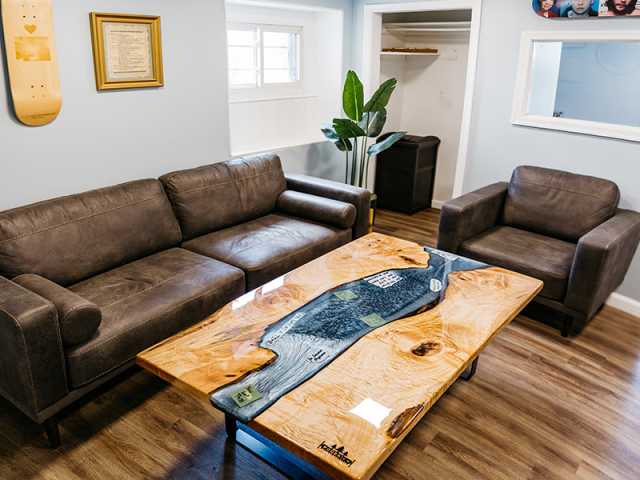
Redemption’s facility has a soul, featuring vibrant artwork and framed skateboards that tell a story of resilience. The modern, sharp design is balanced by these creative touches, turning every group room and lounge into an inspiring backdrop for recovery. By surrounding clients with art, the environment reinforces the idea that life after addiction is full of potential.
Prove that a Sober Life is Anything but Boring
Redemption understands that while not everyone needs a sober living home after treatment, everyone absolutely needs a support network that keeps them connected. Their aftercare features monthly alumni meetings and high-energy events that range from axe throwing and arcades to seasonal snow tubing and bowling. Active clients can join in as well, seeing firsthand that a sober life is not boring.
Highlights from the Center
Highlights
These highlights are provided by and paid for by the center.
Insurance Accepted
Perfect for Professionals
Certified Professionals
Utmost Confidentiality
Center Overview
Treatment Focus
This center treats substance use disorders and co-occurring mental health conditions. Your treatment plan addresses each condition at once with personalized, compassionate care for comprehensive healing.

Insurance Accepted









Recovery.com Verified Listing
Recovery.com verified that the name, location, contact information and license to operate for this treatment provider are valid and up-to-date.
Joint Commission Accredited
Licensed by Delaware
Recovery.com is an independent, third-party mental health resource. Verification does not imply endorsement and does not guarantee the quality of treatment services.
Your Care Options
Specializations
Alcohol
Using alcohol as a coping mechanism, or drinking excessively throughout the week, signals an alcohol use disorder.
Cocaine
Cocaine is a stimulant with euphoric effects. Agitation, muscle ticks, psychosis, and heart issues are common symptoms of cocaine use.
Intensive Outpatient Program
In an IOP, patients live at home or a sober living, but attend treatment typically 9-15 hours a week. Most programs include talk therapy, support groups, and other methods.
Methamphetamine
Methamphetamine is a powerful stimulant that increases energy and alertness. Repeated use can lead to addiction and significant physical and mental health risks.
Opioids
Opioids produce pain-relief and euphoria, which can lead to addiction. This class of drugs includes prescribed medication and the illegal drug heroin.
Outpatient
During outpatient rehab, patients attend a structured treatment program while continuing to live at home.
Twelve Step Facilitation
12-Step groups offer a framework for addiction recovery. Members commit to a higher power, recognize their issues, and support each other in the healing process.
Outpatient Therapy
Outpatient therapy offers scheduled counseling and treatment sessions without requiring an overnight stay or residential care.
Who We Treat
Men and Women
Men and women attend treatment for addiction in a co-ed setting, going to therapy groups together to share experiences, struggles, and successes.
Treatment Services
Day Treatment
Also commonly called PHP, patients may live at home or in a recovery residence while following an intensive treatment program. Most have a weekly schedule of M–F and 4 to 6 hours per day.
Intensive Outpatient Program
In an IOP, patients live at home or a sober living, but attend treatment typically 9-15 hours a week. Most programs include talk therapy, support groups, and other methods.
Outpatient
During outpatient rehab, patients attend a structured treatment program while continuing to live at home.
Approaches
Evidence-Based
A combination of scientifically rooted therapies and treatments make up evidence-based care, defined by their measured and proven results.
Personalized Treatment
The specific needs, histories, and conditions of individual patients receive personalized, highly relevant care throughout their recovery journey.
Twelve Step
Incorporating spirituality, community, and responsibility, 12-Step philosophies prioritize the guidance of a Higher Power and a continuation of 12-Step practices.
Therapies
1-on-1 Counseling
Patient and therapist meet 1-on-1 to work through difficult emotions and behavioral challenges in a personal, private setting.
Art Therapy
Visual art invites patients to examine the emotions within their work, focusing on the process of creativity and its gentle therapeutic power.
Cognitive Behavioral Therapy
Cognitive Behavioral Therapy helps people identify and change unhelpful thought patterns and behaviors that contribute to emotional distress.
Dialectical Behavior Therapy
Dialectical Behavior Therapy teaches skills for managing emotions, improving relationships, tolerating distress, and increasing mindfulness.
Family Therapy
Family therapy addresses group dynamics within a family system, with a focus on improving communication and interrupting unhealthy relationship patterns.
Group Therapy
Group therapy brings people together in a supportive setting to share experiences, develop skills, and work toward common goals.
Interpersonal Therapy
Interpersonal therapy focuses on improving relationships, communication, and social functioning to support mental health and emotional well-being.
Life Skills
Teaching life skills like cooking, cleaning, clear communication, and even basic math provides a strong foundation for continued recovery.
Motivational Interviewing and Enhancement Therapy (MET)
MET combines motivational interviewing techniques with structured feedback to encourage behavior change and treatment engagement.
Languages
Conditions We Treat
Anger
Although anger itself isn't a disorder, it can get out of hand. If this feeling interferes with your relationships and daily functioning, treatment can help.
Trauma
Some traumatic events are so disturbing that they cause long-term mental health problems. Those ongoing issues can also be referred to as "trauma."
Substances We Treat
Alcohol
Using alcohol as a coping mechanism, or drinking excessively throughout the week, signals an alcohol use disorder.
Benzodiazepines
Benzodiazepines are prescribed to treat anxiety, insomnia, and seizures. They can be habit-forming and may cause drowsiness, memory problems, and dependence.
Co-Occurring Disorders
A person with multiple mental health diagnoses, such as addiction and depression, has co-occurring disorders also called dual diagnosis.
Cocaine
Cocaine is a stimulant with euphoric effects. Agitation, muscle ticks, psychosis, and heart issues are common symptoms of cocaine use.
Drug Addiction
Drug addiction is the excessive and repetitive use of substances, despite harmful consequences to a person's life, health, and relationships.
Heroin
Heroin is a highly addictive opioid that produces feelings of euphoria and relaxation. Its use carries serious risks, including overdose and dependence.
Methamphetamine
Methamphetamine is a powerful stimulant that increases energy and alertness. Repeated use can lead to addiction and significant physical and mental health risks.
Prescription Drugs
It's possible to develop an addiction to any drug, even prescribed ones. If you crave a medication, or regularly take it more than directed, you may have an addiction.
Aftercare
Care Designed for Your Needs
Amenities
Learn More About the Center
What High-Functioning Addiction Looks Like
Discover how addiction can hide behind success, productivity, and a life that looks put together.
What Happens after Relapse
Understand what happens after a relapse in early recovery, and why it can be a turning point rather than the end of sobriety.
Brandon Novak’s Message about Recovery
Hear Brandon Novak’s powerful message to South Jersey about how recovery is for everyone.
PHP for Longterm Recovery
Learn why PHP is often a critical step between inpatient treatment and independent recovery.