Find Treatment By
Rehabs by Location


Find Treatment By
Learn
About Us
Recovery.com combines independent research with expert guidance on addiction and mental health treatment. Our mission is to help everyone find the best path to recovery through the most comprehensive, helpful network of treatment providers worldwide.
Advisory Council
Our advisory council brings together leaders in behavioral health, technology, and business. Their diverse expertise ensures our resources and product are innovative, evidence-based, and effective. They guide our mission as accomplished individuals dedicated to improving the landscape of addiction recovery and mental wellness.
What Is Suicide Prevention? 10 Expert Answers On The Internet’s Most Searched Suicide Prevention Questions

Michelle Rosenker is a Senior Web Editor at Recovery.com. She has an extensive background in content production and editing and serves as a subject matter expert in the field of addiction and recovery.
Michelle Rosenker is a Senior Web Editor at Recovery.com. She has an extensive background in content production and editing and serves as a subject matter expert in the field of addiction and recovery.
Table of Contents
- 1. What do I say to someone who is suicidal?
- 2. Does asking someone about suicide put the idea in their head?
- 3. What do I do if I ask someone if they’re suicidal and they say “yes”?
- 4. Why do I feel like I want to die if I’m not sad?
- 5. Can you be high functioning and suicidal, and how would anyone know?
- Resources
If you are in the U.S. and need support, call or text 988 for the Suicide and Crisis Lifeline. If you believe someone is in immediate danger or experiencing a medical emergency, call 911.
Suicidal thoughts can feel like the loneliest place on earth. Not because you are actually alone, but because it feels like no one could possibly understand, and you do not want to burden the people you love.
That is exactly why this podcast episode matters.
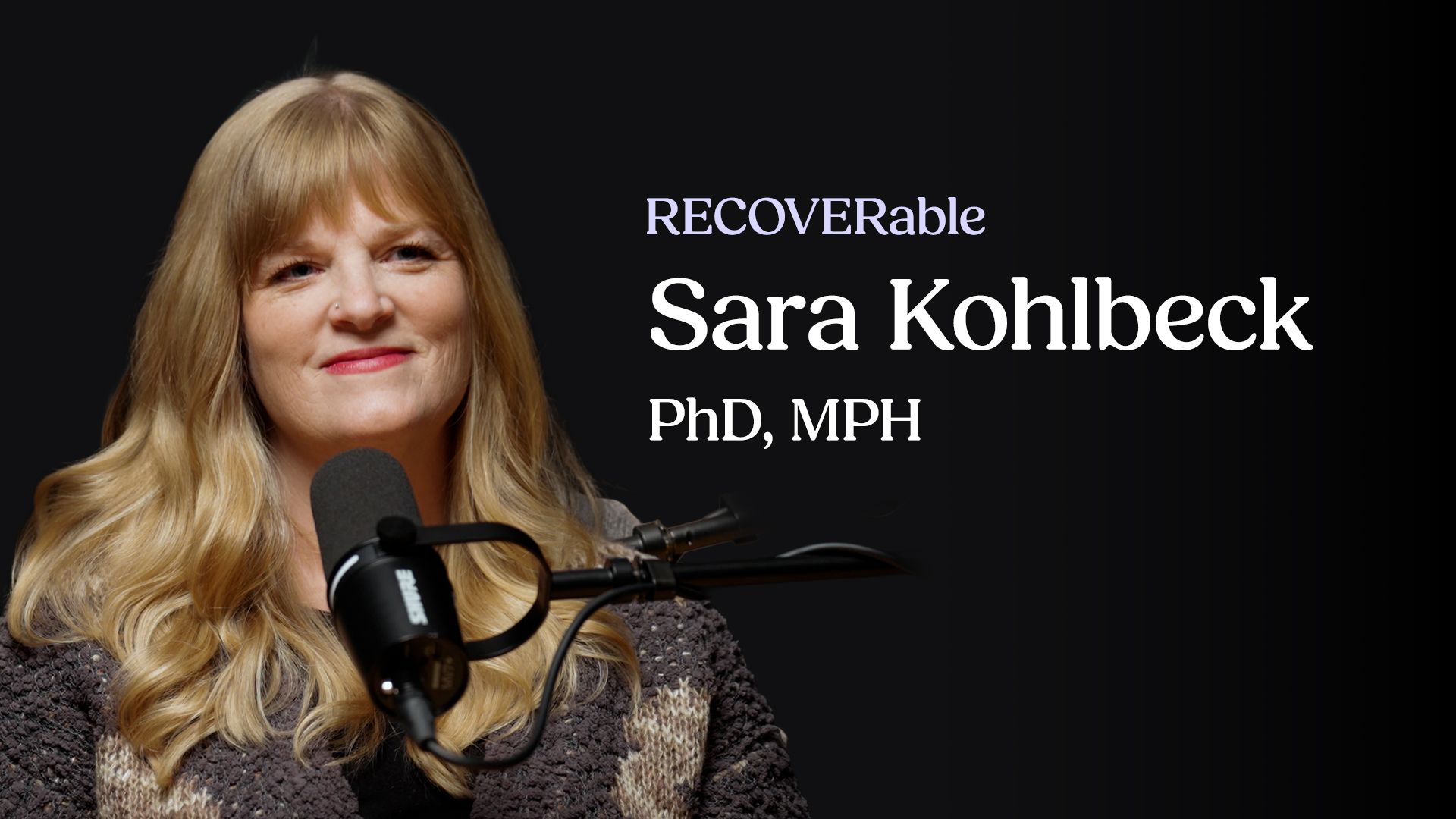
In this conversation, host Terry Maguire sits down with Sara Kohlbeck, PhD, MPH, a public health researcher specializing in suicide, to talk about what most of us were never taught— how suicidal thoughts can show up on a spectrum, how to ask the question without making it worse, and what to do if the answer is “yes”.
If you have ever worried about someone, wondered what words to use, or quietly recognized parts of yourself in this topic, this episode offers a calm, human, practical guide for a scary moment.
1. What do I say to someone who is suicidal?
Ask the real question, then listen like it matters, because it does.
One of the biggest takeaways from Sara is surprisingly simple, if you have that gut feeling, ask directly. No euphemisms. Not “You are not thinking of doing anything stupid, are you?” Direct language creates clarity and safety.
Instead, try: “Are you thinking about killing yourself?” or “Are you thinking about suicide?” Those words can feel intimidating, but Sara emphasizes that being specific matters, because “hurting yourself” can mean many things, and someone may answer “no” even while feeling suicidal.
Then comes the part most people rush past, the pause.
If someone says “yes”, start with validation and gratitude: “Thank you for telling me. I’m really glad you told me.” Sara points out that for many people, being heard is not a small thing. As Dr. Sara Kohlbeck adds from her own interviews with attempt survivors, what people often needed most was to feel less alone, less like a burden, and like their pain was real and worth sitting with.
You do not need perfect words. One of Sara’s favorite lines from a colleague is basically this: an imperfect intervention is better than no intervention. Even a simple, human opener like, “What’s going on, dude?” can interrupt isolation and open a door back to connection.
What if they get angry or defensive when I ask?
Sometimes the conversation does not unfold in neat steps. Because stigma is real, someone might get defensive or mad. Sara’s advice is to avoid escalating the moment. Instead, acknowledge it and leave a clear path back.
You can say: “It sounds like you don’t want to talk about this right now, that’s okay. I’m here if you do.” That single sentence communicates care without pressure.
If it makes sense, add a gentle follow up: “I’ll check in later.” Not to interrogate, but to remind them they are not disappearing from your world.
Are there things we should never say?
When someone is in that tunnel, “fix it” energy can land as dismissive. Sara specifically warns against advice like “try yoga” or “try meditation.” Your goal is not to optimize their wellness routine in a crisis, your goal is to help them feel safe and supported in the moment.
Avoid judgment statements like “How could you be so selfish?”. Sara reframes this powerfully: many suicidal people do not feel selfish, they feel like a burden, and may believe removing themselves would help others.
Also avoid minimizing, even if the trigger seems “small” to you. If they are in pain, the pain is real. Validation sounds like, “That sounds incredibly hard.”
2. Does asking someone about suicide put the idea in their head?
No, asking does not plant the thought, however it can decrease the danger by reducing secrecy.
This is one of the most common fears, and it stops people from speaking up. Sara is clear, research shows asking about suicide does not increase risk.
If the person is already thinking about suicide, you have given them permission to say what they have been holding alone. You have shown them you are a safe person for an unsafe feeling.
And if they are not thinking about suicide, the question still matters. You have communicated something quietly powerful: “If life ever gets that dark, you can tell me.”
The real risk is the silence. When people feel they cannot talk about suicidal thoughts, they can start to believe those thoughts are shameful, dangerous to share, or proof they are broken. Sara’s central theme is the opposite: suicidal thoughts are not uncommon, and we can talk about them, because talking about them is part of prevention.
3. What do I do if I ask someone if they’re suicidal and they say “yes”?
Slow down, thank them, then figure out where they are on the spectrum.
A key concept in this episode is that suicidal thoughts are not a simple “yes” or “no”. One helpful image they discuss is a “thermometer” of suicidality, ranging from passing thoughts, to passive wishes, to planning and intent, to attempt.
That spectrum matters because the right response depends on where someone is.
Start with the human basics: “That must have been hard to share. Thank you for trusting me.” Then, listen. Sara encourages people not to treat the next step like a scripted checklist.
Instead of immediately jumping to “Do you have a plan?”, create space for the story — when did this start, what has it been like, and what feels unbearable right now?
Then, with care, you can ask questions that help you understand urgency, like whether they have been thinking about ways to harm themselves or feel at risk of acting soon.
If you believe there is immediate danger or a medical emergency, call 911.
If there is not immediate physical danger, Sara recommends options that can be less threatening and more supportive, like calling or texting 988, or contacting a county mobile crisis team if available. She also notes that some people fear calling for help because they worry police will show up. She shares that in Wisconsin, the vast majority of 988 calls do not involve law enforcement, they are primarily supportive conversations and connection to resources.
Another surprisingly helpful question is: “What can we do to keep you safe for now?” Not forever. Not next month. Just now. When tomorrow feels impossible, “right now” is a reachable target.
4. Why do I feel like I want to die if I’m not sad?
Suicidal thoughts aren’t always sadness— sometimes they’re anxiety, anger, numbness, or pure overwhelm.
A lot of people assume suicide is always about sadness. Sara pushes back on that box. Yes, sadness can be part of it, but for many people it is extreme anxiety, anger, or the feeling of being crushed by pressures with no way out.
They also talk about numbness, the “I don’t feel anything” state. And in some ways, numbness can be harder for other people to notice. Someone who is crying might draw concern. Someone who is flat, quiet, and going through the motions might just look tired.
This section of the conversation is a reminder to widen the lens. If you are thinking, “I’m not sad, so why am I having these thoughts?” you are not broken. You are having a human response to pain, stress, fear, or disconnection, and it deserves support.
If you recognize yourself here, Sara’s core message is simple and steady: you are not alone, you are not a burden, and the feeling can pass. You do not have to wait until it becomes an emergency to reach out. 988 is there for crisis support, and many communities also have warm lines and peer support options where the goal is simply to talk and feel less alone.
5. Can you be high functioning and suicidal, and how would anyone know?
Yes, people can look “fine” and still be in the tunnel.
One of the most eye opening parts of this episode is how clearly Sara describes “high functioning” suicidality. She shares her own lived experience: she kept going to work, kept parenting, kept showing up on the outside, while on the inside she was barely holding it together.
At the end of the day, she describes sinking into the couch, physically withdrawing, like her body was trying to disappear.
That disconnect is why stereotypes are dangerous. Suicidal thoughts do not always look like chaos. Sometimes they look like productivity, caretaking, and a smile that disappears the moment the door closes.
So what can you look for?
Sara mentions signs that can sometimes show up from the outside: increased substance use, hopelessness, anxiety, anger, impulsive behavior that is out of character. But, she also emphasizes that many people actively hide their distress because they do not want to be a burden.
That is why the most reliable tool is not mind reading, it is connection. Ask questions. Notice shifts. Trust the “something feels off” instinct.
How do I tell someone I’m struggling, especially if they don’t believe in therapy?
Sara acknowledges how hard it can be to tell a parent or partner you are thinking about ending your life. She recommends asking to talk privately, and being as direct as you can, because indirect hints might not land.
If your family does not “believe in mental health,” Sara suggests taking suicide out of that mental health box. Talk about the pressures and pain you are experiencing, the tunnel feeling, the overwhelm, the lack of a way out. Those experiences are real, even if someone does not have the language for therapy.
And if the person you told does not respond well, that is not the end of the road. Sara recommends a backup plan, such as reaching out to a friend, teacher, coach, pastor, colleague, neighbor, or calling 988. The most important thing is that you keep reaching until you find someone who can hold space with you.
The biggest lesson from Part One of this episode is both heavy and hopeful: suicidal thoughts are more common than we like to admit, and talking about them can be a form of prevention.
Resources
- Creating a Safety Plan
- How to Stop Suicidal Thoughts
- Helping Someone Who is Suicidal
- Suicide Resources for Veterans
- 50 Best Treatment Centers for Suicidality
Come back next Thursday, March 12th, for Part Two of this episode of RECOVERable!
Our Promise
How Is Recovery.com Different?
We believe everyone deserves access to accurate, unbiased information about mental health and recovery. That's why we have a comprehensive set of treatment providers and don't charge for inclusion. Any center that meets our criteria can list for free. We do not and have never accepted fees for referring someone to a particular center. Providers who advertise with us must be verified by our Research Team and we clearly mark their status as advertisers.
Our goal is to help you choose the best path for your recovery. That begins with information you can trust.